5,000 ha Plantation · 600 Trees/ha · 16 ML Oil at Maturity · Full Value-Chain

The Green Bio-Hub — an integrated regional bioenergy and carbon model.

Not just a plantation. Not just a fuel. A fully integrated regional production system that generates fuel, certified organic fertiliser, biomass energy, activated carbon, ACCU credits, and regional employment — from a single Pongamia feedstock grown on land no one else wants.

5,000
Hectares — total plantation footprint
600
Trees per hectare
3M
Trees in the plantation at maturity
16 ML
Oil produced per year at tree maturity
Year 1
ACCU credits begin accumulating
Year 3–4
First seed harvest — intercrop oil from Year 1
40+ yrs
Productive life of the plantation
Zero
Food crops displaced — non-edible, marginal land
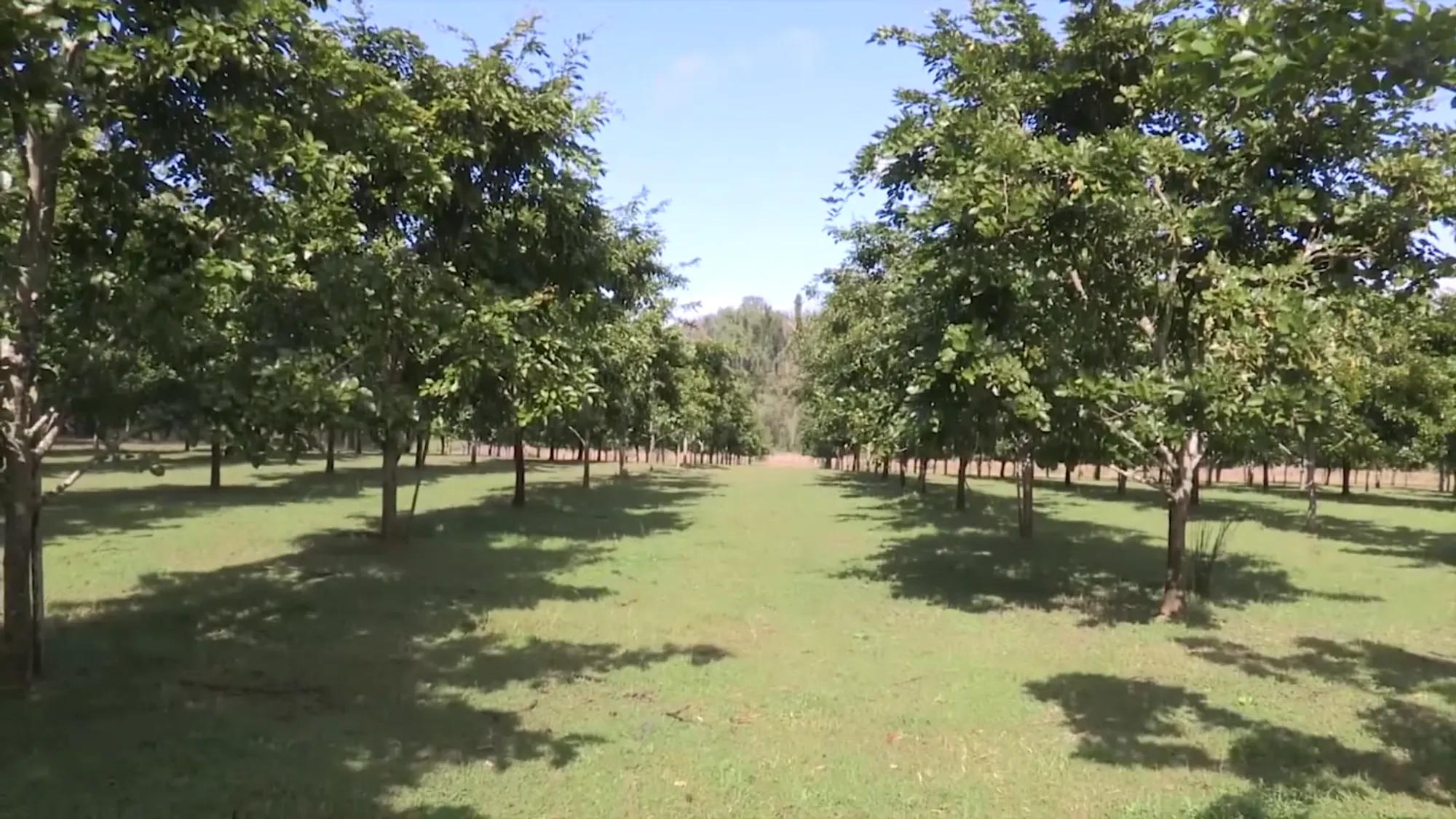
Young Pongamia plantation — 5,000 ha at 600 trees/ha

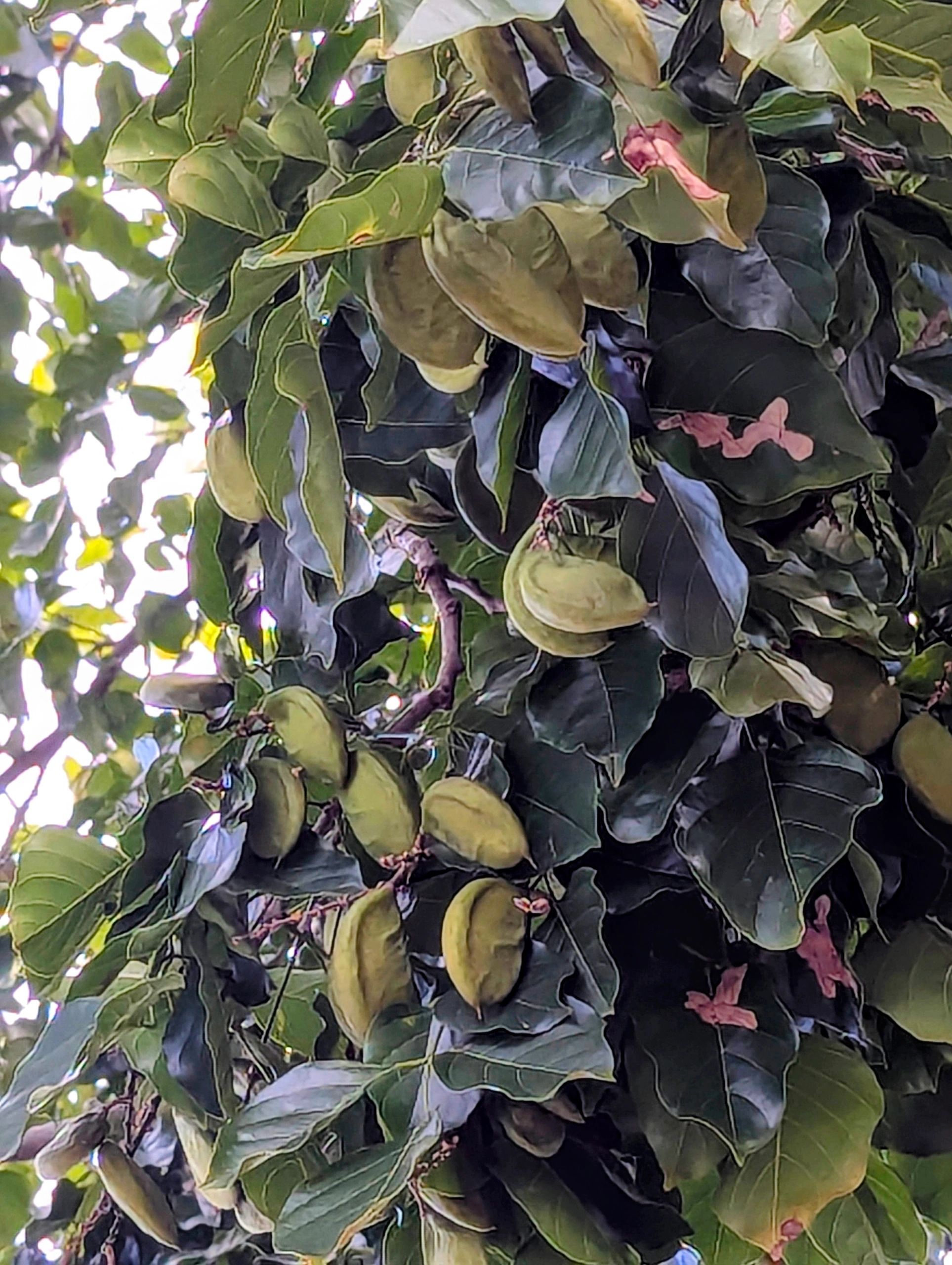
Young Pongamia plantation — approaching first seed harvest. At 600 trees/ha across 5,000 ha, the Green Bio-Hub plantation contains approximately 3 million Pongamia trees. This image shows early canopy development before first flowering — ACCU sequestration credits are already accumulating. At full maturity the plantation produces 16 million litres of fuel-grade oil per year. Engine trials on PD100™ are the current operational focus, progressing toward commercial fuel supply.

3 million trees. 5,000 hectares. All on land that was producing nothing.

The Green Bio-Hub is designed at a scale that makes commercial fuel supply viable — 5,000 ha of Pongamia at 600 trees/ha produces 3 million trees and, at full maturity, approximately 16 million litres of fuel oil per year. This is enough to supply meaningful volume to a regional mining fleet or freight operator.

The Green Bio-Hub plantation was established on former cattle grazing land — country that supported beef production and now supports a far higher-value land use. In the Queensland context, the model includes rehabilitation of end-of-life coal mine sites, which have large areas of disturbed but structurally intact land that Pongamia's drought tolerance and nitrogen-fixing root system can productively colonise.

Pongamia's nitrogen-fixing root symbiosis continuously improves soil organic matter — meaning the land becomes more productive over time, not less. A 40-year plantation leaves the site in better ecological condition than it started. The former cattle grazing land, once limited to seasonal beef production, becomes a permanent carbon-sequestering, oil-producing asset generating multiple revenue streams.
Why 600 trees/ha? Pongamia's optimal spacing allows canopy development without excessive competition for water and nutrients. At 600 trees/ha on 6m × 2.7m spacing, the plantation reaches full canopy closure at approximately Year 7–8, maximising both seed yield and carbon sequestration per hectare.

Intercropping unlocks revenue from day one.

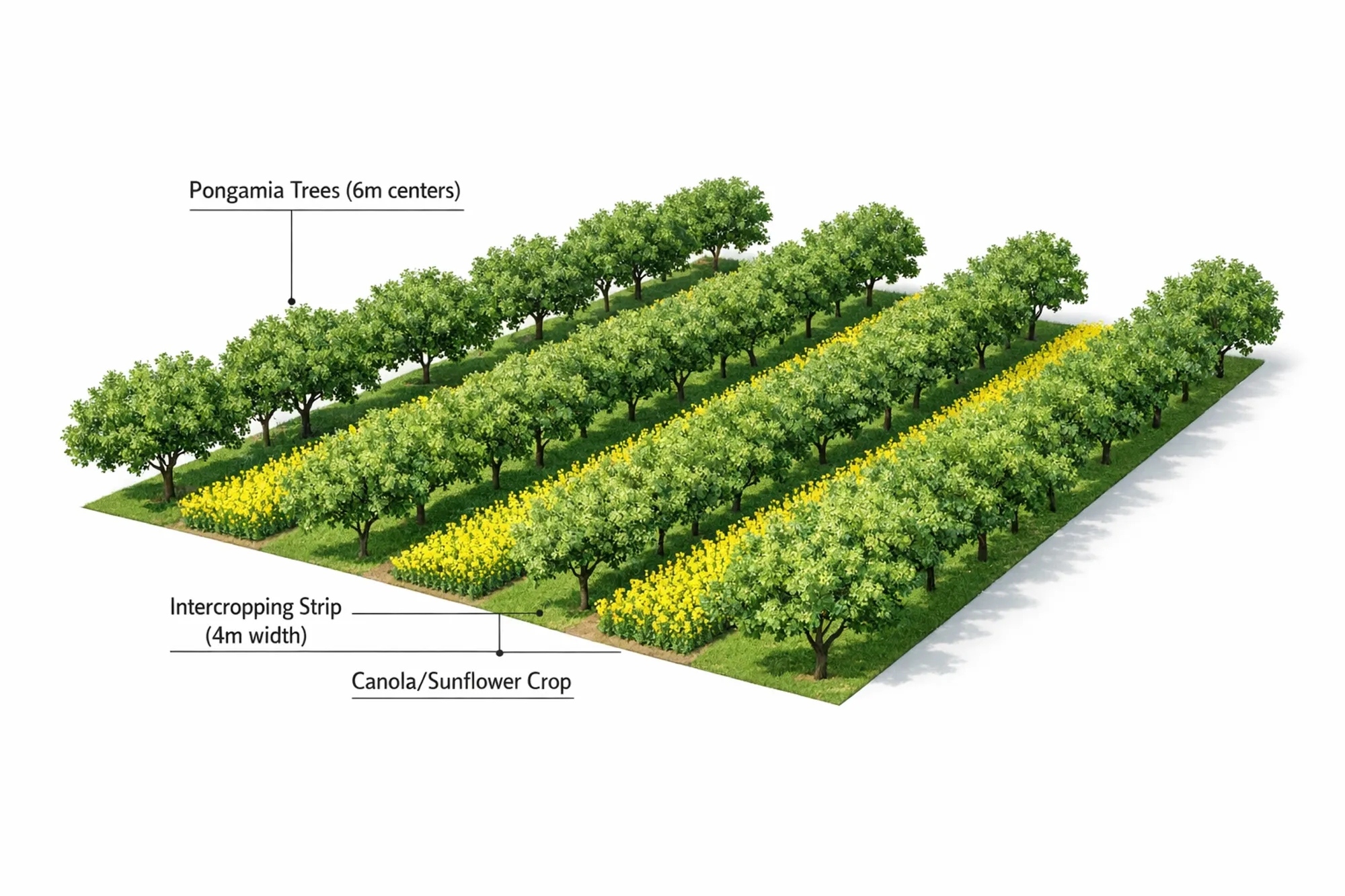
While Pongamia trees develop toward full seed production (Years 7–10+), canola and sunflower crops are grown in the 4m intercropping strips between tree rows. These annual oilseed crops generate immediate income, feed the same mechanical expeller extraction plant, and suppress weed growth — eliminating early-stage holding costs.

Pongamia intercropping model — Pongamia trees at 6m centres with 4m canola/sunflower intercrop strips
Pongamia rows: 6m centres
Intercrop strip: 4m width
Intercrops: Canola, Sunflower
Benefit: Immediate cash flow, weed suppression, shared extraction infrastructure

The intercrop programme — fuel from Day One of the plantation.

Pongamia trees take 3–4 years to reach first seed harvest. That creates a gap — an established plantation consuming land and capital, but not yet producing oil. The Green Bio-Hub solves this through an intercrop programme: oil-producing annual crops planted between the young Pongamia trees in Years 1–4, generating fuel oil for customers from Year 1.

🌱 The Intercrop Programme — oil from the rows between the trees

In Years 1–4, the spacing between Pongamia tree rows (6m row spacing × 2.7m in-row spacing) leaves a productive strip between rows. With 6m between rows and mature canopy spread taken into account, approximately 4m of each inter-row gap is available for intercropping during early establishment years. This space is planted with fast-maturing oilseed crops that:

→ Generate fuel-grade oil for customers from Year 1 of the plantation
→ Cover establishment costs during the pre-production phase
→ Improve soil health through root diversity and nitrogen contribution
→ Provide income for regional farm workers during the establishment phase

🌻

Sunflower

High-oil-yield annual crop suited to Queensland soils. Direct-pressed oil compatible with PD100™ fuel blend.

Oil yield: ~1,000–1,500 L/ha
🌿

Camelina

Low-input oilseed with excellent fatty acid profile for fuel use. Cold-tolerant, drought-tolerant. SAF precursor.

Oil yield: ~700–1,200 L/ha
🫘

Canola / Rapeseed

Well-established oilseed agronomy. Highest oil yield of common intercrops. DIN 51605 compliant when processed.

Oil yield: ~1,200–1,800 L/ha
🌱

Mustard Seed

Fast-maturing, suitable for northern Queensland. Oil can be blended with Pongamia PPO or supplied separately.

Oil yield: ~800–1,000 L/ha
Customer benefit: Intercrop oil allows customers to begin a fuel supply relationship and begin trialling pure plant oil in their fleets from Year 1 — building operational familiarity with PPO fuel management before Pongamia volumes scale. The intercrop phase transitions seamlessly to Pongamia production as trees mature.

Every part of the Pongamia tree generates revenue.

The Green Bio-Hub extracts maximum value from every tonne of Pongamia biomass. Nothing is waste — each product stream has a commercial destination.

Pongamia seed pods — PD100™ feedstock

PD100™ Fuel Oil

Primary Product · 16 ML/yr at maturity

The primary commercial product — pure plant oil fuel produced from mechanically pressed Pongamia seed kernels. At 5,000 ha and 600 trees/ha, the plantation produces approximately 16 million litres of fuel-grade oil per year at full tree maturity.

Meets DIN 51605 specification. Supplied to mining operations, freight fleets, stationary power plant, and remote communities within the Green Bio-Hub supply catchment.

Key data: ~16 ML/year at full maturity (Year 7–10+) · 5,000 ha plantation · 600 trees/ha · 3 million trees · LHV ~37 MJ/kg · Target price comparable to mineral diesel
Fuel conditioning: Standard diesel detergents and decoking additives are blended into PD100™ prior to supply, maintaining injector cleanliness and preventing combustion chamber deposits across trial and commercial fleets.
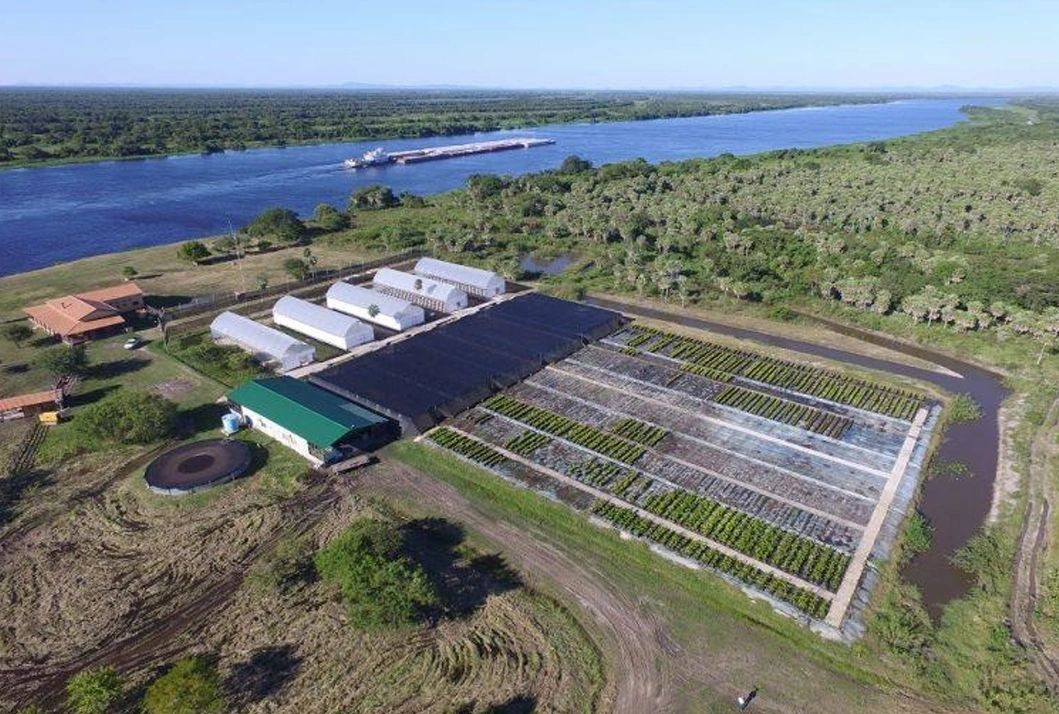
Pongamia plantation
🌿

Organic Seedcake Fertiliser

By-product of oil pressing · High commercial value

After the oil is extracted, the pressed seed residue — the seedcake — is a dense, protein-rich organic material with fertiliser properties that exceed those of poultry manure across most key agronomic metrics. It also has potential as a high-protein cattle feed supplement, leveraging the existing cattle industry context of the plantation land.

Unlike synthetic fertilisers, Pongamia seedcake is bioactive — it contains beneficial microorganisms, naturally occurring biocides (karanjin, pongamol), and a slow-release nitrogen profile that feeds soil health rather than depleting it. It improves soil water retention, enhances microbial communities, and suppresses certain soil-borne pathogens.

Comparison: Nitrogen content 3.5–4.5% (vs. poultry manure ~2–3.5%) · Phosphorus 1.5–2.5% · Contains karanjin/pongamol — natural biopesticide properties · Certified organic — no synthetic inputs in production chain · Slow-release nitrogen profile superior to water-soluble synthetics
Pongamia nursery
🔥

Seed Pod Biomass

Energy or Activated Carbon · Two options

The outer seed pod shell — the fibrous husk that surrounds the seed — is a significant biomass resource that offers two distinct commercial pathways depending on market context:

Option A — Biomass co-firing: Dried and pelleted seed pods can be co-fired as biomass fuel at coal-fired power stations as a partial coal substitute, reducing Scope 1 emissions from power generation while utilising what would otherwise be waste material.

Option B — Activated carbon: Pongamia pod shells have a high carbon content and a cellular structure that makes them well-suited for activated carbon production via pyrolysis. Activated carbon is a high-value industrial product used in water treatment, air purification, gold extraction, and pharmaceutical processing.

Option A: Co-firing with coal reduces power station Scope 1 per MWh · Biomass qualifies as renewable under RET scheme
Option B: Activated carbon value significantly higher than raw biomass · Industrial demand: water treatment, mining (gold), pharmaceuticals
🌱

ACCU Sequestration Credits

From Year 1 · Plantation-wide · ~$35/t

The 3 million Pongamia trees across the 5,000 ha plantation begin sequestering atmospheric CO₂ from Year 1. Under the Carbon Farming Initiative, verified sequestration generates Australian Carbon Credit Units (ACCUs) eligible for surrender under the Safeguard Mechanism or sale on the secondary market.

This is carbon revenue during the pre-production phase — the plantation generates income from its sequestration function before it produces a single litre of fuel.

Indicative range: 5,000 ha × 7 t CO₂/ha/yr (conservative) = ~35,000 ACCUs/year during rapid growth phase · ACCU revenue available from Year 1, before fuel production begins
🍂

Intercrop Oilseed Revenue

Years 1–4 · Bridges pre-production gap

Annual oilseed intercrops planted between the young Pongamia trees in Years 1–4 generate fuel oil for customers from the first year of operation — eliminating the revenue gap during the Pongamia establishment phase.

Canola, sunflower, camelina, and mustard are the primary candidates for northern Queensland conditions. Oil yields of 700–1,800 L/ha/yr depending on crop selection. Inter-row area available reduces as Pongamia canopy closes in Years 4–6.

Commercial value: Enables Year 1 customer fuel supply · Bridges 3–4 year pre-production gap · Revenue covers plantation establishment costs · Transitions to Pongamia production from Year 3–4 onwards
👥

Regional & Indigenous Employment

Social Return · ESG · Regional Development

A 5,000 ha plantation with on-site processing creates substantial regional employment — harvest crews, equipment operators, processing plant staff, logistics, maintenance, and administration. In regional Queensland, this represents a significant local economic contribution.

The Green Bio-Hub model includes a dedicated employment pipeline for local Indigenous workers. Harvest crews, equipment operators, processing plant staff, and maintenance roles are all suited to structured training and employment programmes with regional Indigenous communities.

Employment estimate: ~50–120 direct jobs at full scale (harvest, processing, logistics, maintenance) · Additional indirect employment in supply services · Consistent with Queensland government regional development objectives

Mechanical cold-press. Simple, proven, and closed-loop.

Pongamia oil is extracted using a mechanical screw press (expeller) — the same equipment used in every canola, sunflower, and olive oil production facility in the world. Seeds are fed into the press, a rotating screw applies increasing pressure, and oil is forced out through the barrel casing.

Pongamia oil is extracted using a mechanical screw press (expeller) — no chemical solvents, no transesterification, no refinery. Seeds are cleaned, pressed, and the oil filtered. An acid degumming step follows, removing phospholipids to bring the oil to DIN 51605 fuel specification.

Acid degumming uses dilute phosphoric acid to hydrate and precipitate non-hydratable phospholipids, followed by neutralisation with potassium hydroxide (KOH). The process wastewater is rich in phosphorus and potassium — the two primary macronutrients removed. Rather than treating this as effluent, the wastewater is fed directly back to the Pongamia plantation through the irrigation system (fertigation). The phosphorus and potassium returned to the root zone replace exactly what the trees exported in seed production. Nothing leaves the site as waste — the degumming circuit is a closed nutrient loop.

The process also produces protein-rich seedcake — the solid material remaining after pressing — which is used as a high-protein cattle feed supplement or organic fertiliser, generating a second commercial revenue stream.

→ Full extraction process detail
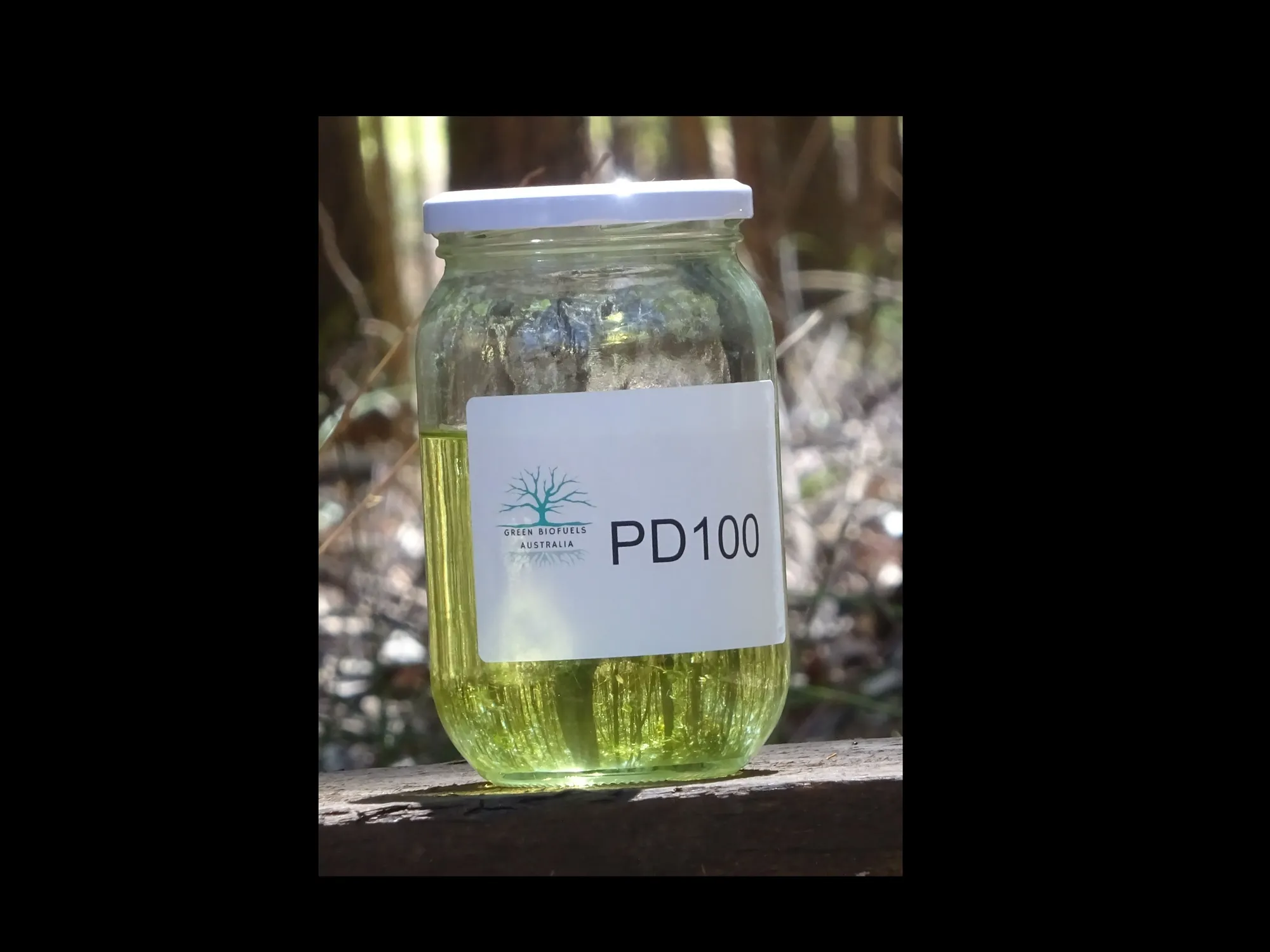
PD100™ Pongamia pure plant oil — mechanically pressed

PD100™ — the finished fuel product after mechanical cold-pressing and basic filtration. No chemical inputs at any stage.

PD100™ vs Cooking Oil — processing steps
Cooking oil
Clean → Press → Solvent extract → Degum → Bleach → Deodorise → Bottle
7 steps
PD100™ fuel
Clean → Press → Degum→ Filter
4 steps — done

Turning a rehabilitation liability into a productive green asset.

End-of-life coal mine sites represent one of the most compelling opportunities for Green Bio-Hub development. The infrastructure is already there. The obligation to rehabilitate already exists. Pongamia turns that liability into a revenue-generating bioenergy and carbon asset.

🏭

Existing processing infrastructure

End-of-life mine sites often retain workshops, power connections, water supply, road access, and site offices — all of which can be repurposed for Bio-Hub processing operations at significantly lower capital cost than greenfield development.

🛤️

Heavy vehicle road access already built

Coal mines are accessed by sealed or hardened haul roads suitable for fuel tanker delivery. The access infrastructure that served coal extraction serves bio-hub fuel distribution at no additional capital cost.

💧

Water management systems in place

Mine site water infrastructure — dams, bore fields, water treatment — can serve plantation irrigation needs during establishment. Pongamia's drought tolerance means irrigation requirements are modest after canopy closure.

Grid or off-grid power connections

Many mine sites retain grid connections or have capacity for on-site solar/battery generation. Processing plant power requirements are modest by mining standards.

📋

Rehabilitation obligation → ACCU asset

Mining companies face statutory rehabilitation obligations that typically represent a significant cost. A Green Bio-Hub converts that rehabilitation liability into an ACCU-generating carbon asset, potentially generating revenue that offsets the remediation cost entirely.

🌍

ESG narrative transformation

A coal mine site that closes and becomes a certified organic fertiliser and renewable fuel production hub is an extraordinary ESG story for a mining company's stakeholder communications. The site's history becomes part of the transition narrative.

Multiple Revenue Streams at Maturity

The 5,000 ha Green Bio-Hub generates value across four parallel streams — PD100™ fuel oil, certified organic seedcake fertiliser, biomass or activated carbon from pod shells, and ACCU carbon credits from Year 1. Engine trials are the current focus, with commercial fuel supply scaling as plantations mature. Contact us to discuss commercial arrangements.

🔬 Research context: GBA's coal mine study

In October 2025, GBA was awarded a research grant for the first pre-implementation study assessing large-scale Pongamia development on a rehabilitated coal mine site in central Queensland. Results expected mid-2026. This study will provide the first verified agronomic, carbon, and economic data for this specific land-use combination in the Australian context.

How a Green Bio-Hub develops — phase by phase.

Phase 1 — Establishment & Intercrop (Years 1–4)

Land secured, site prepared, trees planted, processing infrastructure design begins

Pongamia seedlings planted at 600/ha across the 5,000 ha footprint. Intercrops (canola, sunflower, camelina) planted between rows in Years 1–4, generating immediate oil income. ACCU credits begin accumulating from Year 1. Site infrastructure repurposed or constructed.

  • Intercrop oilseed revenue from Year 1
  • ACCU sequestration credits generated and monetised
  • Processing plant design and construction commences
  • Customer supply relationships established on intercrop oil

Phase 2 — First Pongamia Harvest & Processing Scale-Up (Years 4–7)

First seed pods harvested, oil extraction operational, fertiliser production begins

First Pongamia seed harvest occurs at Years 3–4 (early-maturity trees). Oil extraction plant operational. Seedcake fertiliser production commences — first certified organic batches to market. Intercrop oil supplemented and then replaced by Pongamia production as canopy closes.

  • First Pongamia PD100™ available to customers
  • Seedcake organic fertiliser production and sales begin
  • Pod shell biomass collection and processing commences
  • ACCU credit generation in high-growth phase — maximum sequestration rates

Phase 3 — Full Commercial Production (Years 7–10+)

16 million litres per year, full product portfolio, long-term supply contracts

Plantation at full yield — approximately 16 ML of fuel oil per year. Fertiliser, biomass, and activated carbon product lines fully operational. Long-term supply contracts with mining operators, freight, and power generation customers. ACCU methodology registered and credits flowing.

  • ~16 ML/year PD100™ fuel supply to contracted customers
  • Full seedcake organic fertiliser production — certified organic designation
  • Biomass / activated carbon product at commercial volume
  • ACCU credits registered and surrendered or sold
  • Plantation productive for 30+ further years

Interested in Bio-Hub partnership or land development?

Whether you hold marginal land, operate an end-of-life mine site, or are looking for an integrated bioenergy and carbon investment — let's talk.

Start a Conversation Australia's Fuel Security Crisis About PD100™