⚠ National Security · Strait of Hormuz · 33 Days of Diesel

Australia's fuel security crisis — and what a domestic biofuel supply chain changes.

As of March 2026, Australia holds just 33 days of diesel on Australian soil — one-third of the IEA minimum standard. Fifty per cent of that diesel supply passes through the Strait of Hormuz. The US-Iran conflict has made this vulnerability impossible to ignore.

⚠ Active situation — April 2026

Australia racing to secure fuel as Strait of Hormuz constrained

On 28 February 2026, the US and Israel launched military operations against Iran. Tanker traffic through the Strait of Hormuz — through which approximately 20% of global oil supply flows — was severely disrupted. Brent crude surged 13% intraday. Australia, holding 33 days of diesel, released 6 days of strategic reserve, reducing effective cover to approximately 27 days. NSW relaxed petrol quality standards for 60 days. The Prime Minister urged calm against panic buying. As of April 2026, the conflict remains active.

Sources: Reuters, ABC News, Climate Energy Finance, Hansard 2 March 2026

Australia's fuel reserves — March 2026 (Minister for Energy, Hansard 2 March 2026)

~27
days
Diesel
on Australian soil + EEZ
IEA minimum obligation: 90 days. After 6-day strategic reserve release (Mar 2026): ~30% of IEA target.
36
days
Petrol
on Australian soil + EEZ
IEA minimum obligation: 90 days. Australia: 40% of target.
32
days
Jet Fuel
on Australian soil + EEZ
IEA minimum obligation: 90 days. Australia: 36% of target.
~50%
Diesel supply indirectly exposed to Strait of Hormuz via Singapore refineries
90%+
Liquid fuel imported — no domestic refining buffer
2 of 8
Australian oil refineries still operating
6/8
Australian refineries closed since 2003
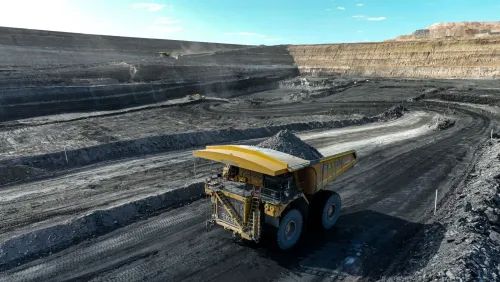
Australian mining operations — diesel dependent heavy haul fleet

Australian open-cut mining operations — heavy haul fleets of this type consume 50–80 million litres of diesel annually per major site. Every litre transits an import supply chain exposed to the Strait of Hormuz.

How Australia became catastrophically exposed to imported fuel disruption.

This is not a new problem. It is the accumulated result of two decades of inaction — and the Iran conflict has converted a policy failure into a live national security emergency.

🏭
6/8

Refinery closures dismantled domestic capacity

Twenty years ago, Australia had eight domestic oil refineries. Six have closed since 2003 — the most recent in 2021. The two remaining refineries rely on imported crude, providing minimal buffer against supply chain disruption. Australia can no longer refine meaningful volumes of domestic fuel.

🚢
~50%

Half of diesel supply traces through Hormuz

Australia's primary diesel supplier is Singapore — but Singapore's refineries import crude oil predominantly from the Middle East, passing through the Strait of Hormuz. ~50% of Australia's diesel supply is therefore indirectly exposed to Hormuz disruption, even though Australia does not import crude directly from the Gulf.

📉
~27

Days of diesel — one-third of the IEA standard

Australia's IEA membership obligates a minimum 90-day reserve. As of 2 March 2026, Australia held 33 days of diesel. Following the strategic reserve release of 6 days, effective cover fell to approximately 27 days — including fuel notionally "in transit" within Australia's EEZ. Fuel "on ships on the way to Australia" cannot be considered secure. Barnaby Joyce's Hansard exchange with Chris Bowen confirmed this detail on the floor of Parliament.

From eight refineries to two — over 20 years of managed retreat.

Bulwer Island (BP)

Brisbane, QLD

Closed 2015

Clyde (Shell)

Sydney, NSW

Closed 2012

Kurnell (Caltex/Ampol)

Sydney, NSW

Closed 2014

Altona (ExxonMobil)

Melbourne, VIC

Closed 2021

Port Stanvac (ExxonMobil)

Adelaide, SA

Closed 2003

Kwinana (BP)

Perth, WA

Closed 2020

Lytton (Ampol)

Brisbane, QLD

Operating

Geelong (Viva Energy)

Geelong, VIC

Operating

Every geopolitical shock becomes an Australian diesel price shock.

Because Australia imports over 90% of its liquid fuels, every disruption to global oil markets lands directly on Australian industry — with no domestic buffer to absorb the impact.

Diesel import price index — relative escalation events

2019
Baseline ~$0.95/L
2020
COVID low ~$0.60/L
2021
Recovery ~$1.10/L
2022
Ukraine shock ~$2.30/L
2023
Easing ~$1.70/L
2024
~$1.55/L
2025
Pre-conflict ~$1.65/L
Mar 2026
Iran conflict surge — Brent +13% intraday
Apr 2026
Ongoing — no structural resolution

2020–2023 import price increase: 244% peak-to-peak (Climate Energy Finance, 2026). Apr 2026 bar indicative — conflict ongoing at time of publication. Chart not sourced from ACCC or AIP data.

The cost-of-living dimension

From 2020 to 2023, average oil import prices into Australia rose 244% — from COVID lows to the peak exacerbated by Russia's invasion of Ukraine. The price of energy was elevated to the central issue of the 2025 federal election. The cost-of-living crisis that has plagued Australians is, in no small part, an imported fossil fuel crisis.

For mining operations specifically, the Fuel Tax Credit Scheme refunds 52.6 cents per litre of diesel excise — but provides no protection against base commodity price fluctuations. A $0.50/L global price increase still flows through entirely to operating costs.

UBS analysts warned during the March–April 2026 conflict that Brent crude could reach US$120/barrel if Hormuz passage remained constrained. Barclays estimated a sustained 3–4 week supply squeeze could push prices above US$100/barrel. As of April 2026, conflict is ongoing with no structural supply chain resolution in place.

+244%
Import price increase 2020–2023 peak
US$120
UBS Brent crude price estimate if Hormuz blocked
$12bn+
Annual fuel tax credits — effectively subsidising imported diesel dependency
~90%
Of Australia's liquid fuel imported — zero domestic buffer

From June 2025 to March 2026 — a rapidly deteriorating situation.

Jun 2025

Israel–Iran 12-day war

A 12-day direct military exchange between Israel and Iran disrupted oil markets and flagged the fragility of Strait of Hormuz passage. Oil prices spiked. Australian government began reviewing fuel reserve policy.

Moderate impact — brief disruption
Sep 2025

Australian fuel security "war-game" report released under FOI

ABC News reported an internal government war-gaming exercise that revealed Australia's fuel security was "falling short." The document — released under FOI — modelled scenarios including Strait of Hormuz disruption. Findings were not publicly acted upon.

Policy warning — not actioned
Oct 2025

GBA research grant awarded

Green Biofuels Australia awarded research grant for pre-implementation study of large-scale Pongamia development on rehabilitated Queensland coal mine land — the first study of this type in Australia.

Domestic fuel solution — progressing
28 Feb 2026

US–Israel military operations begin against Iran

US and Israel launch pre-emptive operations. Iranian Supreme Leader killed. Tanker traffic through the Strait of Hormuz effectively halts. Brent crude surges 13% intraday. Qatar halts LNG production. Saudi Arabia shuts its largest domestic refinery after a drone strike.

Critical — active supply disruption
2 Mar 2026

Parliament — Hansard exchange on fuel reserves

Barnaby Joyce asks Energy Minister Chris Bowen for diesel reserves "on Australian soil." Bowen confirms 34 days diesel, including ships in Australia's EEZ. Joyce challenges: ships in transit can be redirected. Bowen confirms this is correct.

33–34 days effective cover — one-third of IEA standard
4 Mar 2026

Climate Energy Finance publishes emergency briefing

"War on Iran signals urgent need for Australia to end risky imported oil dependency." Calls Australia's situation a "national security emergency." Calls for urgent action on domestic fuel production and strategic reserve levels.

National security framing enters mainstream
13 Mar 2026

Reuters: Australia races to ease fuel supply

Government releases 6 days of strategic reserve. NSW Premier warns of potential fuel shortage at hospitals. Australia relaxes petrol standards for 60 days. PM urges calm, asks public to avoid panic buying.

Strategic reserve released — emergency measures active
21 Mar 2026

Government advises fuel supply "safe until mid-April"

ABC News reports government position: supply sufficient until mid-April. Conflict continues. No long-term supply chain resolution in sight. Import dependency remains structurally unchanged.

Short-term stabilised — structural problem remains

What a domestic Pongamia PPO supply chain changes — specifically.

PD100™ is not a complete solution to Australia's fuel security problem. Nothing that can be deployed quickly is. But it is one of the very few pathways that address the structural vulnerability — production on Australian soil, from Australian feedstock, through Australian infrastructure — with no exposure to the Strait of Hormuz or any international commodity market.

What PD100™ changes for a mining operation

For a fleet consuming 60 million litres of diesel per year, even 30% substitution with PD100™ removes 18 million litres from offshore supply chain exposure.

  • Grown on Australian soil — no Strait of Hormuz exposure
  • Produced domestically — no Asian refinery dependency
  • Priced independently of global crude benchmarks at commercial scale
  • Supply contract at fixed volume — no spot market volatility
  • Plantation stock provides multi-year visibility on supply
  • Simultaneously reduces Safeguard Mechanism obligations
  • Generates ACCU credits from the same plantation supply chain

What PD100™ does not change

In the interest of honesty — PD100™ cannot replace Australia's total diesel demand. We are at early commercial scale. Plantation development takes years. The structural solution to Australia's fuel security requires a combination of: domestic biofuel development, electrification of eligible heavy industry, serious strategic reserve investment, and reform of the fuel tax credit scheme that incentivises continued diesel dependency.

What GBA can offer right now: Trial volumes of PD100™ for fleet assessment, site-specific carbon and cost modelling, plantation development partnership discussions, and research collaboration. Commercial-scale supply grows as plantations mature — operations that begin supply chain discussions in 2026 are positioned for meaningful volumes by 2029–2030.

What peer nations are doing about fuel security and domestic biofuel production.

🇺🇸

United States

Strategic Petroleum Reserve of 700+ million barrels — approximately 120+ days of import cover. Domestic biofuel production at scale under the Renewable Fuel Standard (RFS). Terviva's commercial Pongamia programme supported by Chevron Renewable Energy Group investment.

🇪🇺

European Union

90-day minimum reserve standard enforced. Renewable Energy Directive mandates biofuel blending. Germany's DIN 51605 standard for PPO fuels provides the quality benchmark GBA uses. Active domestic oilseed biofuel industry — rapeseed, camelina, carinata.

🇧🇷

Brazil

World's largest biofuel producer per capita. Mandated 12% biodiesel blend in all diesel. Domestic sugarcane ethanol displaces ~25% of petrol demand. Near-complete insulation from oil price shocks for road transport. Fuel security achieved through sovereign production.

The Australian position: Australia has no renewable fuel standard, no blending mandate, no meaningful domestic biofuel industry, two refineries dependent on imported crude, 33 days of diesel reserve, and a $12bn annual subsidy that rewards continued import dependency. The current crisis is not a surprise — it is the predictable outcome of two decades of inaction on sovereign fuel production.

Domestic fuel production is no longer just a climate story.

It is an economic resilience story. It is a national security story. PD100™ grown on Australian soil, from Australian trees, processed in Australian facilities — insulated from every geopolitical shock that hits the Strait of Hormuz.

Start a Partnership Conversation About PD100™ The Green Bio-Hub Model